


2WD vs. 4WD: How To Pick Wisely
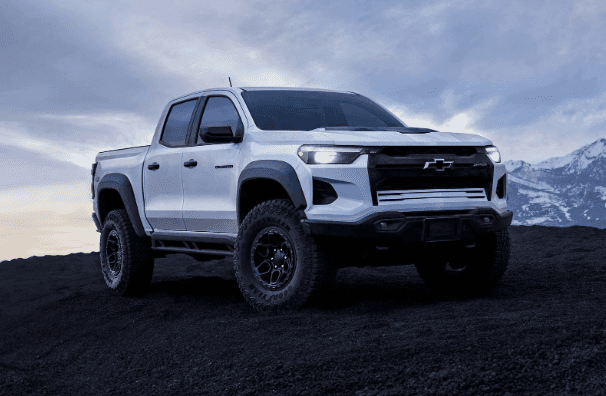
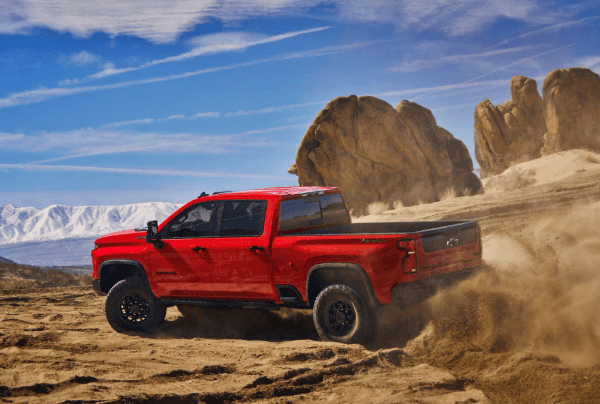
Photo Source/Copyright: Edmunds (left) Car and Driver (right)
Choosing between two wheels or four seems like a straightforward question, at least until a massive February cold snap rolls into town. Ultimately, the 2WD vs. 4WD debate boils down to exactly how much traction you require on the absolute worst road you face, rather than your average daily commute. Mechanically speaking, a two-wheel-drive (2WD) vehicle routes its power to a single axle, while a four-wheel-drive (4WD) setup can send power to both. Everything else simply depends on your driving habits, location, and hauling needs.
The Reality of 2WD
There are two main flavors of two-wheel drive.
- Front-Wheel Drive (FWD): This setup places the engine’s weight directly over the driving wheels, giving them better bite on wet pavement. It’s lightweight, cost-effective, and highly efficient. For example, the Chevrolet Trax utilizes FWD across all of its trim levels.
- Rear-Wheel Drive (RWD): This is the traditional pickup truck configuration. RWD pushes from the back and steers from the front, and having a loaded truck bed actually improves rear tire grip. You’ll find this setup on the Colorado WT and LT, along with 2WD variations of the Tahoe and Silverado 1500. It handles highway commutes and gravel job sites just fine.
How 4WD Works
The core of any 4WD system is its transfer case, which is a gearbox that determines exactly when the front axle needs to engage. Chevrolet refers to its specific version as Autotrac. While entry-level 4WD Silverado trucks feature a single-speed case, upper trims like the Silverado Trail Boss upgrade to a two-speed unit with low range.
This two-speed dial gives you four distinct settings:
- 2HI: Rear wheels only; your standard everyday setting.
- AUTO: Stays in 2WD but automatically engages the front axle when it detects slip.
- 4HI: Locks both axles together to handle mud, snow, and gravel.
- 4LO: Low-range gearing designed for crawling through steep, slow, and ugly terrain.
2WD vs. 4WD: A Side-by-Side Look
| Factor | 2WD | 4WD |
|---|---|---|
| Driven wheels | One axle (front or rear) | Both axles, when engaged |
| Best conditions | Dry or wet pavement | Snow, mud, gravel, and trails |
| Weight and complexity | Lighter, with fewer parts | Adds a transfer case and front driveline |
| Mode control | None needed | 2HI, AUTO, 4HI, and 4LO (two-speed cases) |
| Chevy examples | Trax, Colorado WT and LT, Silverado 1500, Tahoe | Colorado Trail Boss, Z71, and ZR2; Silverado 1500; Tahoe |
Where 2WD Pulls Ahead
Snow is the biggest argument against 2WD. However, installing a great set of winter tires often handles a slippery commute better than most drivers realize, and modern stability and traction control systems silently manage the rest. If your driveway is paved and your local roads are reliably plowed, you might never miss that extra axle. Plus, 2WD offers a few serious perks:
- Simpler mechanics: There’s no front driveline or transfer case to maintain.
- Lighter weight: You aren’t hauling extra mass around every single day.
- Identical tow rating: A Colorado WT or LT equipped with the Advanced Trailering Package can tow the exact same amount in 2WD as it does in 4WD.
Where 4WD Is Worth It
There are certain situations that 2WD simply can’t fake. Whether you’re facing an unplowed county road at 6 a.m., a pasture soaked by three days of rain, or a slick boat ramp covered in algae, the debate ends fast. Having that second driven axle makes the difference between pulling yourself out and having to call a tow truck.
Yes, you take on extra weight and a few more mechanical parts, but that’s the price of being the truck that actually does the pulling. On dry days, the front axle rests: 2HI is the default since most miles are dry. AUTO covers the days when the forecast keeps changing its mind.
Frequently Asked Questions
Q: Can you shift into 4WD while moving?
A: Yes, you can shift between 2HI, AUTO, and 4HI at normal driving speeds. However, for 4LO, you must stop or roll at under 3 miles per hour (MPH) while the transmission is in Neutral.
Q: Can you leave 4WD on all the time?
A: You can safely leave it in AUTO, as that mode is specifically designed for mixed conditions. 4HI is completely different; running it on dry pavement can cause steering vibrations and poor handling.
Q: Is AWD exactly the same thing as 4WD?
A: Not quite. AWD (found on crossovers like the Trailblazer) automatically sends power to all four wheels but lacks a low range. On SUVs and trucks like the Tahoe, Colorado, or Silverado, your choice is strictly two wheels or four.
Ready to Feel the Difference?
Want to feel the physical difference rather than just reading about it online? Swing by the dealership today to test drive a 2WD and a 4WD vehicle back-to-back.
More From NYE Chevrolet
Chevy Silverado RST and Z71: Street Or Trail?
Photo Source/Copyright: Edmunds (left) Chevrolet (right) Walk onto any dealer lot, and you’ll hear truck buyers framing the Chevy Silverado RST vs. Z71 debate as a simple choice between two competing versions. One sits sleek and sharp for Friday night dinner runs; the other is geared for deer camp and muddy job sites,…
Comparing Every Chevy Compact SUV Size Option
Photo Source/Copyright: Chevrolet Shopping for a small Chevy SUV can get surprisingly confusing when you examine the showroom closely. Dealerships often loosely refer to the Trax, Trailblazer, and Equinox as compact vehicles, even though Chevrolet positions them differently in its official lineup. Understanding how these three distinct models actually differ in dimensions, pricing,…
Top Chevrolet Silverado High Country Premium Features
Photo Source/Copyright: Chevrolet Chevy’s top-shelf half-ton truck just got rebuilt from the grille back. The next-generation Chevrolet Silverado High Country isn’t a quick trim refresh with bigger wheels bolted on; it brings new powertrain options, a redesigned cabin, updated screens, and a clearer vision of what a luxury truck should feel like with a…